






If you’ve been looking for a practical way to learn Microsoft Dynamics 365 Business Central, you’re in the right place.
Today, I’m excited to announce the launch of a new learning initiative:
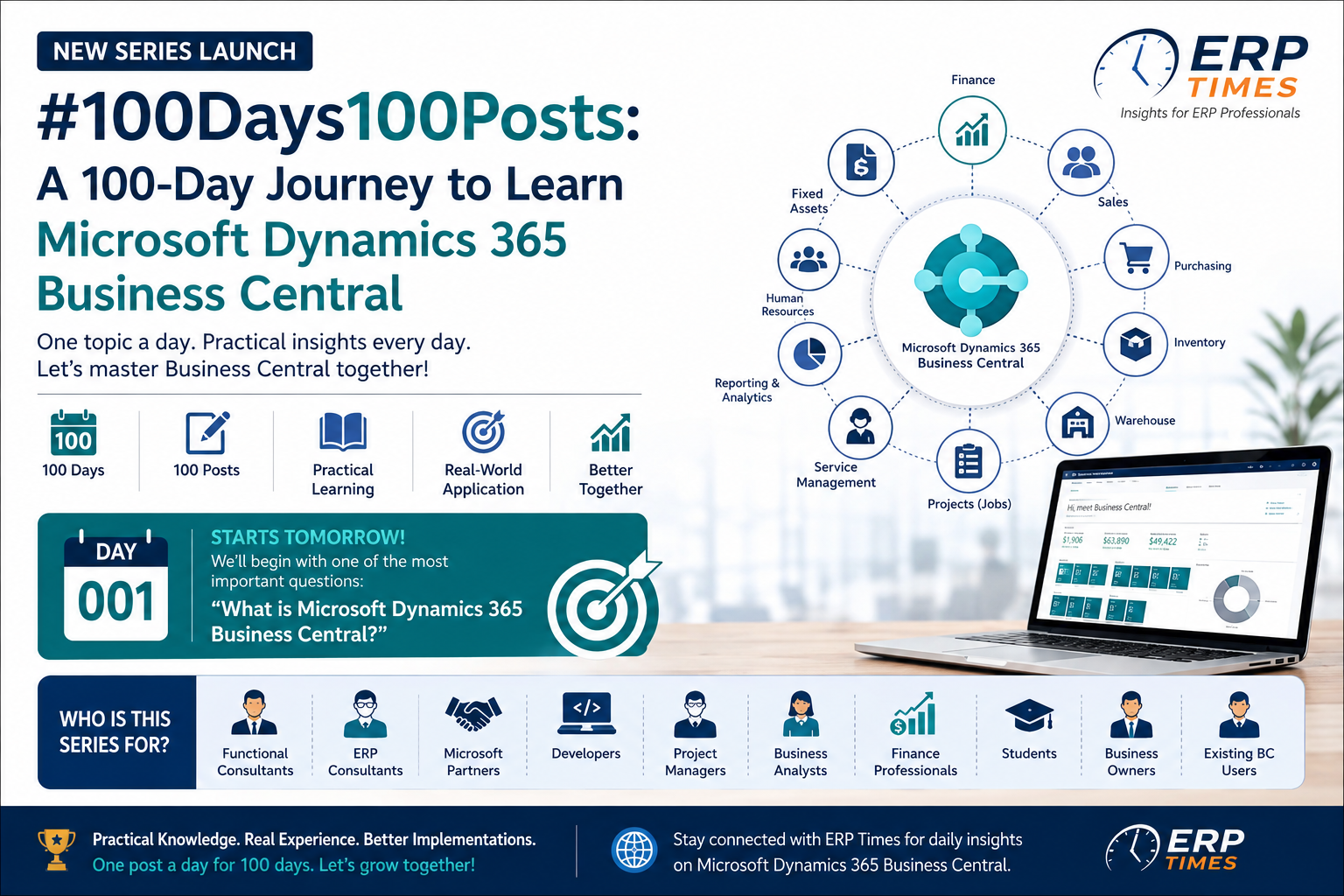
🚀 #100Days100Posts
For the next 100 consecutive days, I’ll be publishing one article every day focused on Microsoft Dynamics 365 Business Central.
The goal is simple—to create a free, structured learning resource that helps Business Central professionals, students, business users, and organizations understand the platform better.
Why This Series?
Microsoft Dynamics 365 Business Central is one of the fastest-growing cloud ERP solutions for small and medium-sized businesses. While there is excellent documentation available from Microsoft, many professionals still struggle to connect technical features with real-world business scenarios.
This series aims to bridge that gap by explaining Business Central in a simple, practical, and implementation-focused manner.
Instead of only discussing features, we’ll explore why they matter, how businesses use them, and what best practices consultants follow during successful implementations.
What Will You Learn?
Throughout these 100 days, we’ll cover a wide range of topics, including:
- Business Central fundamentals
- Finance and accounting
- Sales and purchasing processes
- Inventory and warehouse management
- Manufacturing and assembly
- Project (Jobs) management
- Service management
- Fixed assets
- Human resources
- Reporting and analytics
- Sustainability features
- Integration with Microsoft 365 and the Power Platform
- Microsoft Copilot in Business Central
- Implementation best practices
- Real-world business scenarios
- Functional consulting tips
- Productivity shortcuts and hidden features
- Common mistakes and how to avoid them
Every article will focus on a single topic, making it easy to follow whether you’re reading daily or catching up later.
Who Is This Series For?
This series is designed for:
- Business Central Functional Consultants
- ERP Consultants
- Microsoft Partners
- Developers
- Project Managers
- Business Analysts
- Finance Professionals
- Students exploring ERP careers
- Business owners evaluating ERP solutions
- Existing Business Central users looking to expand their knowledge
Whether you’re a beginner or an experienced consultant, you’ll find practical insights that you can apply in your day-to-day work.
What Makes This Series Different?
The articles won’t simply repeat Microsoft documentation.
They will combine:
- Practical implementation experience
- Functional consulting knowledge
- Real business processes
- Industry best practices
- Lessons learned from customer implementations
- Tips that improve productivity and project success
The objective is to make Business Central easier to understand and more practical to implement.
Why Follow Along?
By the end of this 100-day journey, you’ll have a structured collection of articles covering many of the essential functional areas of Microsoft Dynamics 365 Business Central.
Whether you’re preparing for interviews, implementing Business Central, supporting customers, or simply expanding your ERP knowledge, this series will serve as a valuable reference.
Join the Journey
Learning is more impactful when it’s shared.
I invite you to follow this journey, read the daily articles, share your thoughts, ask questions, and contribute your own experiences. The discussions that emerge from the community are often just as valuable as the articles themselves.
Day 001 begins tomorrow, where we’ll answer one of the most common questions:
“What is Microsoft Dynamics 365 Business Central?”
Stay connected with ERP Times as we explore Microsoft Dynamics 365 Business Central—one topic at a time, for the next 100 days.
About ERP Times
ERP Times is a knowledge-sharing platform dedicated to Enterprise Resource Planning (ERP), Microsoft Dynamics 365 Business Central, Microsoft technologies, digital transformation, AI, and business applications. Our mission is to simplify complex ERP concepts through practical, experience-driven content that helps professionals and organizations succeed.